





You are here

Grid Integration of Renewable Energy (Laos)

Partnerships for Infrastructure, DFAT
Professional Short Course
31 October – 30 November 2022
Delivered as a mix of in-person (Vientiane) and online sessions
Applications open 15 September 2022, and close 2 October 2022 (11.59pm ICT).
This course is open to participants from the Lao People's Democratic Republic only.
To apply for this course, read 'The Application Process' below and then click on the REGISTER ONLINE button (above), which will take you to the application form.
Course Convener: Dr Igor Skryabin
Course Coordinator: Rachel England
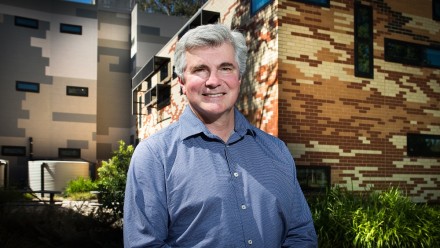
Advisor: Emeritus Prof Kenneth Baldwin
This Grid Integration of Renewable Energy (Laos) professional short course is an intensive 5-week online + in-person (Vientiane) course tailored for professionals working in government, non-government organisations (NGOs), and the private sector in the Lao People’s Democratic Republic. The course provides a deeper understanding of energy transition: the key technologies that will enable a transition to a zero-emissions energy system, and how technology and policy can shape the integration of renewable energy into the grid and enable economy-wide decarbonisation through the electrification of all energy uses.
The course is highly interactive with a mix of lectures, group activities and interactive sessions, providing participants with formal and informal learning opportunities from leading Australia-based academics. Participants will be expected to complete one assignment.
Tentative Schedule
|
Week 1 |
|
Week 2 |
|
|
Week 3 |
|
Week 4
|
|
|
Week 5
|
|
||
|
|
* All sessions are subject to change. Each session will be approx. 2 hours in duration, delivered each day from Monday to Thursday. |
||
Who Should Apply
We encourage professionals working in government, NGOs or private sector on issues related to climate change and energy transition to apply. Participants must hold a mid-level or senior-level policy, practice, research or reform role, whether in government, civil society or the private sector.
It is expected that participants will have completed secondary schooling and at least three years’ tertiary education, have at least five years’ work experience, and have a reasonably good understanding of the subject matter.
The course will be delivered in English with simultaneous Lao translation.
Participants living with disability, persons from remote or regional areas, LGBTIQ+ persons, ethnic minorities, women and people from other marginalised groups are encouraged.
Workloads and Completion Requirements
All sessions are subject to change. Each session will be approx. 2 hours in duration, delivered each day from Monday to Thursday.
To successfully complete the course and receive an ANU Certificate of Completion, participants are required to (as a minimum):
- Attend minimum 50% of sessions (recordings available for all online sessions if missed)
- Complete the assignment: the Implementation Plan
- Actively participate in the course (e.g. submit at least two online posts (questions or comments) to the course’s online discussion panel, or similar)
- Complete the course surveys.
The Application Process
To apply for this course, you need to complete the application form (in English) by 11.59pm ICT on Sunday 2 October 2022. The Application form is an online form with questions relating to your demographics, current and previous relevant work experience, and reasons for applying for this course. The application form also asks applicants to upload their curriculum vitae or resume (in English) - this must be one file (max. file size = 100MB each), and is a mandatory part of the application.
To start your application, click on the REGISTER ONLINE button at the top of this page.
Successful applicants will be notified approximately 2-3 weeks before the course commences.
More Information
If you would like more information about this course, please contact Thipphavone Chanthapaseuth at thipphavone.chanthapaseuth@dfat.gov.au