





You are here

Climate Essentials for Educators

Climate change is already affecting communities across the world, with 2024 the hottest year on record globally. Across Australia, students are seeing and experiencing the impacts of these changes in extreme weather, with more frequent and intense heatwaves, storms, flooding and bushfires.
This Climate Essentials for Educators professional short course has been designed for teachers, principals, school administrators, education designers and education policymakers who seek an overview of the latest science, developments and innovative solutions relating to climate change for translation into classrooms.
The course supports educators to increase their knowledge of climate science and solutions for the purpose of classroom learning. It covers the science of climate change and latest projections, ways that climate evidence and misinformation can be communicated and addressed, the social justice and cultural dimensions of climate knowledge, innovative climate adaptation and mitigation solutions, and student and teacher wellbeing when communicating on these issues.
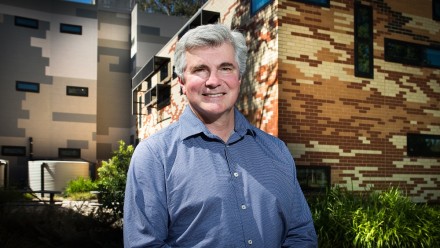
Delivered by the ANU Institute for Climate, Energy & Disaster Solutions (ICEDS), this course is convened by Associate Professor Bec Colvin and Emeritus Professor Mark Howden. Presenters also include global leaders in climate science, health and science communication, as well as practising teachers and education researchers.
"The course was an excellent introduction to different aspects of climate change and its impacts. I appreciated the broad spectrum of ideas, and was grateful for the huge amount of work and thought put into the course design, planning and delivery."
(Emily Begbie, participant of Climate Essentials for Educators, August 2024, in-person course)
Scope
The Climate Essentials for Educators short course provides professionals from the education sector with access to the latest research and ANU expertise on climate change adaptation, mitigation and co-benefits. It is designed to consider the decisions and situations faced by Australian primary and secondary school educators teaching climate change in the classroom.
The course is delivered in real-time, either online or in-person, and is centred on topic-based sessions and workshops with ANU-affiliated researchers who work at the interface of science-policymaking-practice. Group discussions are also a feature of the course - during the topic sessions and at nominated group discussion times - between you, the ANU team and fellow participants who typically come from a diverse range of schools and subjects.
By the end of the course, a fully engaged participant is expected to have, at a minimum, the skills and knowledge to:
- Broadly understand the latest science relating to climate impacts, extremes, and adaptation options in Australia and the region.
- Comprehend many of the social and economic issues that need to be addressed to mitigate and adapt to climate change (including disaster preparedness).
- Identify solutions to many of the climate change challenges presented in the course.
- Know where to access more information on real-world climate change-related case studies for translation to classroom contexts.
- Identify different perspectives, priorities and challenges of colleagues teaching climate change in the classroom.
"This professional learning day was one of the best I’ve attended, and I highly recommend it to anyone looking to deepen their understanding of climate change and enhance their educational toolkit."
(Paul Dorsett, participant of Climate Essentials for Educators, August 2024, in-person course)
In-Person vs Online
The in-person Climate Essentials for Educators course is a full-day, fully catered professional short course delivered from 8:45am - 5:30pm at the Australian National University (Acton campus, ACT). 1-hour topic sessions, workshops, group discussions and networking breaks are featured across the day.
The online Climate Essentials for Educators course is a 3 x half-day professional short course delivered via video conferencing software, e.g. Zoom Meetings or Microsoft Teams. Across three consecutive half-days (9:30am - 1:00pm), topics are featured (two topic sessions per day), plus group discussions and breaks.
Each delivery of the Climate Essentials for Educators course differs slightly to ensure that the sessions stay relevant to the rapidly evolving climate change context. The location, logistics, presenters and specific lecture titles of each course are provided to registrants in the week before the course begins.
An overarching course program is provided in the table below as a guide.
| Session topics * |
|---|
|
Welcome and introduction |
|
Overview of climate change: understanding climate change impacts and extremes |
|
Climate change adaptation |
|
Climate change mitigation |
|
Climate change and society: one specific concept/practice e.g. climate psychology, social licence, Indigenous approaches, or mis/disinformation, etc. |
|
The climate change nexus: one specific adaptation pathway/sector e.g. agriculture, health, water management, circular economy, or built environment, etc. |
|
Teaching climate change: classroom and curriculum considerations |
|
Additional group discussion or activity |
|
Closing and reflections |
* The example program is provided as a guide only. Session topics and sequencing are subject to change to achieve each course's learning outcomes and to align with contemporary challenges of climate change adaptation and mitigation.
Presenters
The Climate Essentials for Educators course features some of the Australian National University's leading climate researchers. Together, our presenters' expertise encompass all facets of climate change adaptation, mitigation and co-benefits - the conceptual, technological, economic, policy and societal opportunities and challenges.
Past and regular ANU-affiliated presenters include:
- Mark Howden, ANU ICEDS, IPCC, Australian National Centre for the Public Awareness of Science (CPAS)
- Bec Colvin, ANU Crawford School of Public Policy
- Will Grant, Australian National Centre for the Public Awareness of Science (CPAS)
- Nadeem Samnakay, ANU ICEDS
- Kirsty Wissing, ANU ICEDS and CSIRO
- Arnagretta Hunter, ANU College of Health and Medicine
- Jenny Newell, Australian Museum
- Bhiamie Williamson, Monash University
- Tanja Russell, ANU Crawford School of Public Policy
- Sharon Forwood, Educator and ANU ICEDS Visiting Fellow
"The course gave me the confidence I need to be able to talk about and teach aspects of climate change in the classroom environment."
(Thomas Hull, participant of Climate Essentials for Educators, December 2023 online course).
Who Should Attend and Why?
The course is most relevant to registered teachers and principals, and education designers, policymakers and administrators who wish to increase their knowledge of climate science and solutions for the purpose of classroom learning.
Since 2023, 60 participants have attended our two Climate Essentials for Educators courses and given it an overall average rating of 4.48 out of 5 (~90%, high distinction!)
The course was accredited by NESA (NSW) in 2023, and it has been accredited by TQI (ACT) since 2024 for recognised professional development hours.
Course Dates
There are no upcoming dates for Climate Essentials for Educators. Please register your interest via the link below.
| Express your interest here |
|---|
* Courses may be added to the 2026 calendar as the year progresses. To stay informed of future courses and dates, express your interest here.
To enquire about a private course for your organisation or community group, contact the ICEDS professional learning experiences team via icedscourses@anu.edu.au.
Important Information
- The course is delivered either as a fully online course or an in-person course.
- Six broad topics are presented with breaks and group discussions.
- Registrations for our public courses are via Humanitix (with 100% of Humantix profits going to education charities).
- Registrations close 1 week before the course commences.
- Each individual course take place subject to demand. Registrants will receive a full refund in the unlikely event that the course is cancelled. Places on our public courses are limited to 30 participants and registrations are on a 'first come - first served' basis. Private or tailored courses have a flexible maximum participant number. For more details on refunds, see our refund policy.
- To receive an ANU Certificate of Participation at the end of the course, participants must attend at least 50% of the topic sessions/group discussions. The ANU Certificate of Participation is not an Australian Qualifications Framework (AQF) qualification and cannot be used for course credit or exemption at ANU.
- If you have a registration request after the booking portal closes, please contact the ICEDS professional learning experiences team directly via icedscourses@anu.edu.au.
Participant Acknowledgement
By enrolling in and participating in this course, you acknowledge that you have read, understood, and agree to comply with the terms of this Copyright and Privacy Notice, including all restrictions on access, use, and dissemination of course materials.
Registration Privacy Notice
By registering for this course, you are also subscribing to the ANU Institute for Climate, Energy & Disaster Solutions mailing list. You can unsubscribe at any time by clicking on the unsubscribe button at the bottom of correspondence. Find out more information in the course registration privacy notice.
Event Photography and Recording
ICEDS professional learning experiences may be photographed and recorded. Images and recordings are kept by ICEDS and may be used for monitoring and evaluation purposes, and for promotional purposes including websites, publications, social media and other modern technologies. If you do not want to be recorded at a course, please inform the photographer or course facilitator on the day. If you do not want to be included in a course recording, please contact us at icedscourses@anu.edu.au.