





You are here

ANU Climate, Energy & Disaster Solutions Highlights 2025

In 2024, the average global temperature exceeded 1.5 degrees above the pre-industrial level for the first time in recorded human history. While breaching this mark for a single year does not mean humanity has failed in its effort to “limit the temperature increase to 1.5 degrees Celsius above pre industrial levels”, as committed to by signatories to the UNFCCC Paris Agreement, the direction of travel is clear.
Emissions of carbon dioxide from fossil fuels are projected to have increased 1.1 per cent in 2025 year-on-year, reaching 38.1 billion tonnes. Signs of climate breakdown include coral bleaching affecting 84.4 per cent of coral reefs globally. As I write this, Victoria is suffering through another f ire event following the tragic bushfires of 2019-2020.
In Australia, 2025 saw a number of initiatives designed to bend the emissions curve, and to enhance climate resilience. The government announced a new emissions reduction target of 62 to 70 per cent by 2035, relative to 2005. Treasury modelling confirms this requires us to make real inroads into reducing emissions across sectors. The government also released the first ever National Climate Risk Assessment and National Adaptation Plan; a crucial agenda to move forward with in 2026 and beyond. Internationally, while COP31 will be held in Türkiye, Australia will be President of Negotiations and a special Pre-COP will take place in the Pacific, supported by Australia.
At ICEDS, we continued advancing innovative solutions to climate change, the energy transition and disaster risk reduction. Our transdisciplinary approach brings together experts across The Australian National University (ANU) to deliver research, teaching, outreach and engagement. Landmark research from a team including ICEDS members Professor Nerilie Abram, Dr Nicola Maher, Professor Sarah Perkins-Kirkpatrick and Dr Georgina Falster quantified climate harms from the Scarborough gas project, finding its emissions would increase heating and deaths globally. Important work continues in the area of industrial decarbonisation, led by the work of Professor Mark Knackstedt, Dr Victor Pantano and others at OreAI, Professor Frank Jotzo and Dr Jorrit Gosens at the ANU Centre for Climate and Energy Policy, and Associate Professor John Pye and Dr Alireza Rahbari in the School of Engineering. Associate Professor Emma Aisbett continued her work on embedded emissions accounting in partnership with Dr Hina Aslam. We also published national guidelines on the use of Nature-based Solutions to mitigate flood risk. Led by Associate Professor Roslyn Prinsley, supported by the Australian Government and implemented with communities in News South Wales and Queensland, this work is the culmination of several years of research and collaboration. The 7th Assessment Round of the Intergovernmental Panel on Climate Change kicked off with a joint meeting between the three working groups in Paris, and ANU is well represented in this important work that will continue through the coming years.
In his last address as ICEDS Director, Emeritus Professor Mark Howden AC FTSE FAA emphasised that real action is needed in addition to target setting. At the ANU Energy Update we led the conversation on the new 2035 emissions reduction target and what is required to get there. In her keynote, Deputy CEO of the Climate Change Authority (CCA) Eliza Murray outlined the process for developing the Authority’s independent advice to government, and panel discussions drew out the importance of trust in enabling a rapid transition to a low carbon economy.
We are proud of our executive education program, which reached hundreds of participants in 2025 both from Australia and from more than 20 countries through Indian Ocean Rim Association (IORA) program funded by the Department of Foreign Affairs and Trade. Among other activities, we partnered with UNICEF Australia, UNICEF Pacific, and Western Sydney University in welcoming 50 young adult delegates from Pacific Island nations, Australia, and New Zealand to build climate leadership skills. We also facilitated submissions from our members on a range of issues critical to national policy, including the Climate Risk Assessment and the Select Committee on Information Integrity on Climate Change and Energy.
This report offers a glimpse of our work at ICEDS and at ANU over 2025. We remain committed to driving transdisciplinary and multidisciplinary solutions to climate change, and I am delighted to be able to continue as ICEDS Director supporting this work. On behalf of ICEDS I thank you for your continued support.
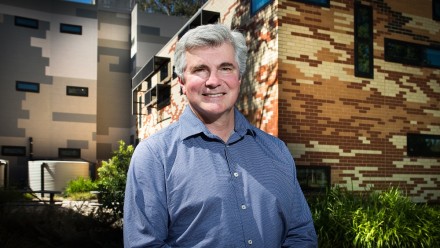
Professor Llewelyn Hughes,
Director
ANU Institute for Climate, Energy and Disaster Solutions (ICEDS)