
Renewable Energy Systems program
The Renewable Energy Systems program aims to understand the geopolitical, economic and technological drivers needed to ensure the successful trade in renewable electricity.
Image
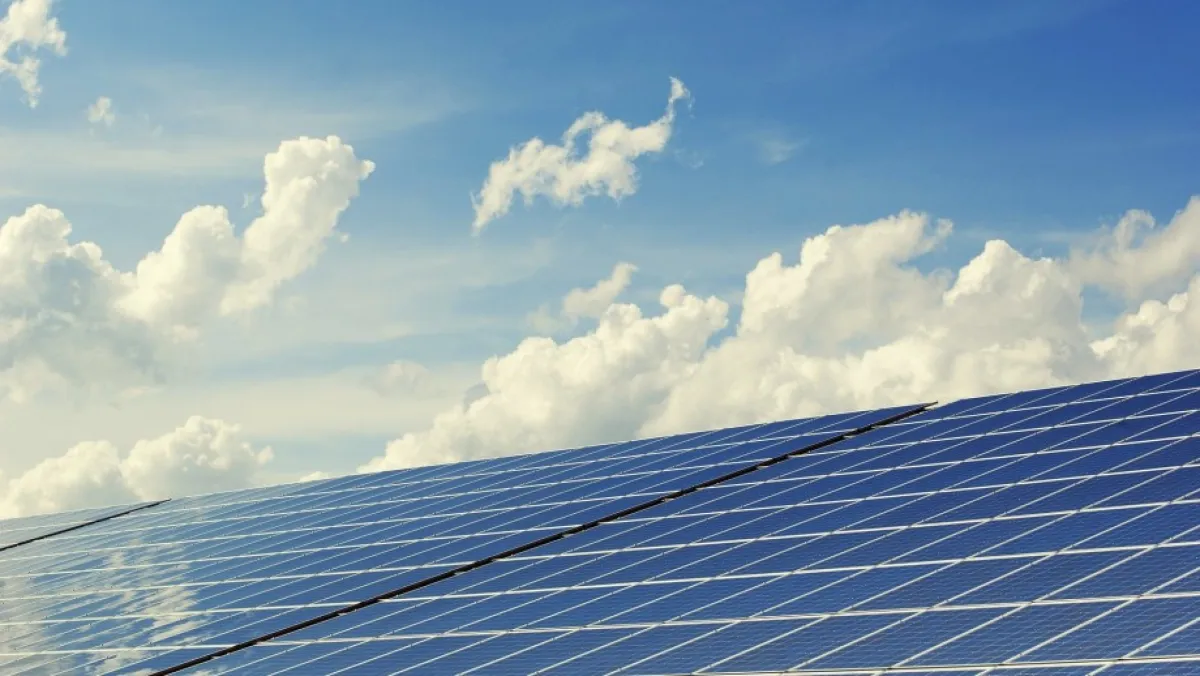
The Renewable Energy Systems program aims to understand the geopolitical, economic and technological drivers needed to ensure the successful trade in renewable electricity. By providing the techno-economic basis, this project aims to show how zero-carbon electricity systems can be broadly viewed as a secure and reliable economic opportunity in Australia and the world. This project will also provide a greater understanding of the scale of the opportunity for renewable electricity exports from Australia.
Project team
Convenor
- Dr Bin Lu
ZCEAP fellows
- Dr Thang Do
- Dr Reza Fazeli
ANU research team contributors
- Emeritus professor Kenneth Baldwin
- Associate professor Fiona Beck
- Professor Andrew Blakers
- Professor Paul Burke
- Professor Kylie Catchpole
- Dr Cheng Cheng
- David Firnando Silalahi
- Professor Llewelyn Hughes
- Dr Matthew Stocks
Other contributors
- Anna Nadolny (ANU College of Engineering and Computer Science)
- Timothy Weber
Publications
- Cheng Cheng, Natalia Pereira Gutierrez, Andrew Blakers, Matthew Stocks, GIS-based solar and wind resource assessment and least-cost 100% renewable electricity modelling for Bolivia , Energy for Sustainable Development, Volume 69 (August 2022)
- Reza Fazeli, Fiona J. Beck, Matt Stocks, Recognizing the role of uncertainties in the transition to renewable hydrogen , International Journal of Hydrogen Energy, Volume 47, Issue 65 (July 2022)
- Paul Burke et al., Contributing to regional decarbonization: Australia’s potential to supply zero-carbon commodities to the Asia-Pacific , Energy, Volume 248 (June 2022)
- David Firnando Silalahi et al., Indonesia’s vast off-river pumped hydro energy storage potential , Energies (May 2022)
- Cheng Cheng et al., 100% renewable energy in Japan , Energy Conversion and Management (March 2022)
- Matthew Stocks et al., Global emissions implications from co-combusting ammonia in coal-fired power stations , Journal of Cleaner Production (February 2022)
- Anna Nadolny et al., Fully electrified land transport in renewable electricity networks , Renewable Energy (January 2022)
- Bin Lu et al., Low-cost renewable electricity in Southeast Asia supported by pumped hydro storage , Energy (December 2021)
- Andrew Blakers et al., The observed cost of high penetration solar and wind electricity , Energy (October 2021)
- David Firnando Silalahi et al., Indonesia’s vast solar energy potential , Energies (August 2021)
- Liam Hayes et al., Accurate long-term power generation model for offshore wind farms in Europe , Energy (August 2021)
- Sunil Prasad Lohani, Andrew Blakers, 100% renewable energy with pumped hydro storage in Nepal , Clean Energy (June 2021)
- Marta Victoria et al., Solar photovoltaics is ready to power a sustainable future , Joule (May 2021)
- Bin Lu et al., A zero-carbon, reliable and affordable energy future in Australia , Energy (April 2021)
- Andrew Blakers et al., A review of pumped hydro energy storage , Progress in Energy (March 2021)
- Matthew Stocks et al., Global atlas of closed-loop pumped hydro energy storage , Joule (January 2021)
- Cheng Cheng et al., Pumped hydro energy storage and renewable electricity for East Asia , Global Energy Interconnection (October 2019)
- Andrew Blakers et al., Pathway to 100% renewable electricity , IEEE Journal Photovoltaics (September 2019)
- Bin Lu et al., GIS algorithms to locate pumped hydro storage sites , Applied Energy (July 2018)
Short articles
- Andrew Blakers, Anna Nadolny and Ryan Stocks, Batteries of gravity and water: pumped hydro sites near reservoirs , The Conversation (November 2022)
- Andrew Blakers, Solar production surge and Australia’s opportunity , The Conversation (September 2022)
- David Silalahi and Andrew Blakers, Solar and hydro storage for Indonesia decarbonisation , The Conversation (May 2022)
Submissions
- Bin Lu et al., (September 2023)