

Energy economics and policy
ANU’s energy economics and policy expertise, centred in the Crawford School and Research School of Economics, focuses on zero-carbon energy systems. The Centre for Climate and Energy Policy collaborates internationally on climate policies, while the Climate and Energy Program addresses energy politics and effective policy design.
About
Expertise in energy economics and policy at ANU is concentrated in the Crawford School of Public Policy and the Research School of Economics and draws on disciplinary strengths in economics and political science.
Economics and policy for zero-carbon energy
The Centre for Climate and Energy Policy (CCEP) anchors a network of Australian and international researchers providing insights on the economics of climate change, its implications for public policy, and the design of policies for zero-carbon energy systems. Professor Frank Jotzo, Director of CCEP, leads a collaborative research program with leading Chinese universities on China’s climate change policies and energy sector reforms, funded partially by an Australian government grant. Topics of joint research include prospects for China’s emissions trading scheme and the economics of decarbonising China’s energy system.
The Climate and Energy Program of the Centre for Applied Macroeconomic Analysis (CAMA) is an international network of scholars working in climate and energy, integrated with the Climate and Energy Economics Project at the Brookings Institution in Washington DC. CAMA hosts the G-Cubed model, an international macroeconomic model developed specifically for analysing climate policy scenarios. The model is used by governments and agencies around the world.
A key focus of economics research within the cluster is how to design energy-sector policies and approaches to deliver reliable, affordable, and clean energy.
Energy politics and policies
A second area of research focus is the political context of domestic and international energy issues, and implications for policy. Current interests include:
- The politics of climate change negotiations
- How and why energy politics and policies are changing in response to technological change and climate change
- The democratic challenges associated with energy reforms, including questions of effective citizen engagement for public legitimacy
- Policy design for cross-border trade in zero-carbon products.
News
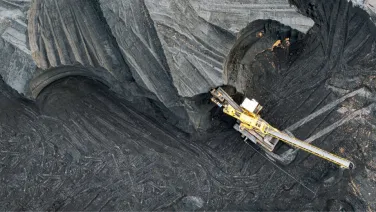
China's demand for coal imports, including from Australia, will drop significantly by 2025, according to new modelling led by researchers at The Australian National University (ANU).
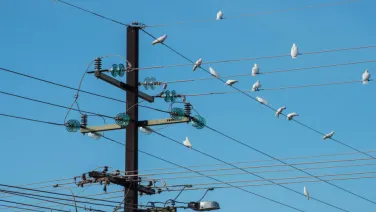
In some remote Northern Territory communities nearly all households, 91 per cent, experienced a disconnection from electricity during the 2018-19 financial year, according to a new study led by The Australian National University (ANU).